- Sections :
- Business
- Crime & Public Safety
- Local Area
- More


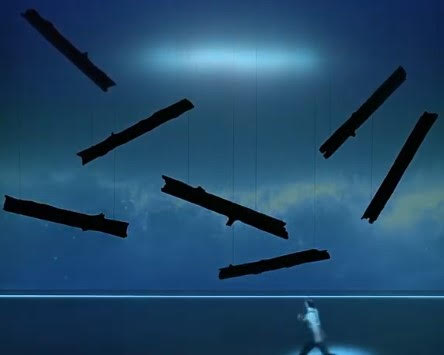
HOUSTON, TX -- I almost didn’t make it to this masterpiece by the late Robert Wilson due to illness and emergency surgery (another foot of scar) in April, but I was lucky to catch the U.S. premieres final performance of Handel’s ‘Messiah,’ at the Houston Grand Opera’s Wortham Theater Center on May 3rd. Messiah was born from the musical hand of George Frideric Handel, then ‘Born Again’ if you will, from the arrangement of Wolfgang Amadeus Mozart who added clarinets, flutes, horns, and trombones to the orchestration, when he translated it into German; thus creating a musical performance that everyone should hear at least once in their lifetime. Handel’s friend Charles Jennens looked mainly to the 1611 King James Authorized Version and prayer books in developing the oratorio that is ever so popular. Add the late Robert Wilson to the recipe, and it becomes a remarkable piece of interpretive opera (first performed in Salzburg, 2020), that lovers of surrealism, plus those gifted in the art of detection, coupled with a basic knowledge of the Good Book; and it leaves the viewer satisfied in their plausible conclusions. And despite all that, there is no real right or wrong answer to any operagoers interpretations (but I’ll offer my own), just Wilson’s offering to the audience to draw their own conclusions.
The Messiah operatic is not so much a religious presentation as it is a spiritual episode. And in a way, I wish I could have had multiple brains to fully enjoy everything on an equal plane: the music, staging, and the vocals of principals and comprimarios, as well as the activities of the supers, or chorus; because inevitably there is always something that gets lost because of line of sight or hearing if a member of the audience coughs (from the on-stage fog irritants) or moves with their head and not eyes. In this review, I want to go in a different direction for a bit, leaving other outlets to give their typical takes, which is fine, but I wish to get a deeper understanding into Robert Wilson the man himself, and absorb his take on props, and their meanings, and the movements of the players on the stage, plus the motivations behind them.
Don’t get me wrong. The music of Handel and Mozart’s arrangement, as well as the vocals from the cast and chorus, to hear it live is a dream, that plus listening to the final performance of Maestro Patrick Summers before he moves into the role of HGOs Music Director Emeritus. It was a privilege to have been part of it. In my area H’s-M in opera has never been offered, but to see Wilson’s guidance played out with the very much alive Co-Director Nicola Panzer on stage is a rare occasion, a beautiful leap of faith that few have taken. Some may see the minimalism of Wilson’s set as appalling, but Co-Set Designer Stephanie Engelin has captured the truth of the style that made the man, being reared in childhood by a demanding and religious father, with a laboriously condemning church culture in Waco. RW really didn’t start to break free until he reached UT Austin in 1959, then onto Brooklyn following that in 1963, where he discovered the value of working with disabled children, including those with brain injuries, learning of simple things, the movement of fingers and toes, and embracing the silence of the moment.
He embraced strong women mentors in his life, from Byrd Hoffman, who started him on his love of patience and ‘sllloooowwwinnnggg down’ in his life as a 17 year old, such as in his speech (which cured his stutter), to Jessye Norman, and re-learning the value of silence on stage shortly after 9/11, and the simple act of knowing how to stand in a commanding presence on a stage and triumph when overcome with emotion. Much of RW’s early work was based in silence and on movement, a sort of outward expression yielding results in inward feeling. His study of polar bears at the Bronx Zoo, on their simple movements just as babies and toddlers, brought about the mildly sloth-like and precious movements for his cast and supers, as being at times more treasured than even the music and vocals themselves. RW took the knowledge in how the human body can feel, or in essence hear sound, or feel its waves, an off-shoot of his adopting a young deaf black boy in 1967.
“From movement comes sound,” Wilson would say on occasion.
You can see Messiah props from his previous works, such as the floating tree from his play, “A Letter from Queen Victoria,” a collaboration with a teenaged Christopher Knowles. He used theme and variation in his work just as composers do, looking for the irony behind the words themselves. RW had a fascination with time and space, even in the simple act of standing. The Heavens are above, the Earth below, and in Messiah, we see his play with props and their use over the years with slight tweaks on their presentation, the shepherds staffs (branches), floating logs (7 pillars), the skeletal remains (Christ’s body), the space man (ascending to the Heavens). You can see RW’s captivation with doors (the three sided monolith, a sort of trilateral polygon wide top capital ‘A’ looking object without the cross or a bottom side). You can see the cup overfloweth and baptism, plus the floating tree inverted (a possible reference of the roles changing on Earth from Christ being crucified, to Peter taking over Jesus’ Earthly mission. Peter was crucified upside down in Rome).
For the stage itself, Wilson’s megastructure, or the box, or house, is the structure and has a strict form, but he gives everyone in the audience their own space (or place), which is a gift to design to their own tastes. Hence, you are giving ownership in his work to make what you can in the offerings from all angles, all the nooks and crannies that you can receive information, to absorb every ounce of available knowledge from the stage and orchestra pit. The pursuit of perfection, or the mastering of movement was an obsession of RW’s. In his 12-hour silent opera ‘The Life and Times of Joseph Stalin,’ from 7pm-7am, he demanded the freedom of movement, or its repetition from the cast to the point of being able to be done in one’s sleep if necessary. You can see a reference to the beginnings of Messiah’s haybale, the old man (some believe it may be Charles Darwin), and the quadrilateral shape of an Egyptian tomb, and even an early attempt at an iceberg or possibly the trilateral polygon.
In ‘Einstein on The Beach,’ the Heavens come into play with variations of a vertical line of light, as opposed to Messiah’s 7 Pillars, a nod to Isaiah 11:2’s Seven Spirits of the Lord: Wisdom, Understanding, Counsel, Strength, Knowledge, and the Fear of the Lord. On the horizontal there was a train, while in Messiah there is a boat that transits the stage.
Pretty much every aspect of the stage had been proven tried and true by Wilson. He just reached into his toolbox to pull out a prop, sort of like Agatha Christie with her drawer full of written down clues that she maintained for Hercule Poirot or Miss Marple.
There may be conflict between admirers of conflicting camps once you get into the skin, meat and bones of the production. Of course, conductor Patrick Summers is a legend to his followers, and some may find the surreal nature of Robert Wilson’s staging as difficult to accept, which comes down to personality, and a willingness to accept what is being presented on the stage as opposed to the orchestra pit. There are some factors that can be off-putting, such as the religious aspect for some, but that can be easily overcome with treating Christ as a historical figure. The minimalism of the stage for those that demand stationary props cannot be overcome, so you have to have a little imagination.
Messiah is a plea for World Peace, and has as much meaning today, as it did in the 18th, 19th, and 20th centuries. The choreography is simple yet profound, and pacing changes to the tastes of the director. In Salzburg, 2020, the Minkowski-Wilson production’s pace was quicker by half in its gait, while at the HGO the steps taken by the cast were carried out with more care, with a precision that demanded actual concentration; and with RW’s specifications of movement, who knows how many miles were logged at such a snailish pace.
As with the meaning of the props, some liberties can be taken with the casts themselves. The girl could be a young Mary, the future mother of Christ, with the hay bale possibly representing the Nativity scene and the manger, initially resisting the pressures of marriage and motherhood, before eventually finding acceptance to the task and flying off on the back of the hay bale. RW loathed naturalism, opting instead for the fairy tale or the more surreal aspects of the presentation on the stage. No one walks normally in Messiah, which was a signature of Wilson’s. There will be a bounce in their step, or a sudden pirouette, the arms or hands will be doing something different, or there will be a quick snap turn of the head and wink.
I came half-way expecting the language to be in German, which didn’t matter to me with my years stationed in the country, but the translations are right there; and even with the English arias, at times to get the full jist, your eyes would have to wander upwards. The great Mozart’s commission to freshen the orchestration with the adjusting of a small number of arias, and whether it was the Sons of Levi being Purified, or the great ‘Hallelujah,’ the Chorus filled the rafters, the individual division of voices were Heavenly harmonious and created memories for the ages.
Each of the soloists in the cast I labeled as ‘Angel’ or ‘Prophet,’ the ones who annunciate the Chronicles of The Christ.
The tenor Ben Bliss, I labeled as the strutting Suited Angel, the playful prophetic messenger of the Old Testament, revealing to Jerusalem that a savior is coming. Bliss’ initial Accompagnato was masterful, soothing in its tone, and his Aria brought on thought the last will first and the first will be last with his “Ev’ry Valley,” in that the valleys will rise and the mountains will fall.
The Bass-Baritone Soloist Nicholas Newton bounding vocals were golden. I labeled him as a Prophet, perfectly reflective of the highs of the Heavens to the lows of the Sea. He was truly a commanding presence on stage, and in his Accompagnatos and Arias, his voice reflected the angered Deity of the Old Testament, thunderous and deep, judgemental of The World of the past and as it is today. His announcement in Part 3 of the Trumpets Shall Sound triggering the volley and trumpets and horns was incredible, and cemented memories in the audience.
One difference between the Houston and Salzburg productions was the choice of Countertenor Soloist Aryeh Nussbaum Coehn, as opposed to Contralto Wiebke Lehmkuhl who played the role in Austria. I mean, there is no real controversy, since both have similar vocal and pitch ranges, with just differences in gender and timbre. The decision not to fully follow Wilson ‘s precise instructions from 2020, could have come down to availability or the simple preference of Nicola Panzer. After all, it was Panzer’s box, and she was claiming her space in Wilson’s megastructure, again, making it her own place for presentation to the audience. I labeled Cohen’s character as the ‘Blue Angel,’ who could be the Angel Gabriel, the one who appeared to Mary informing her that she would bear The Son of God, without the knowledge of man. The countering moods in between heralding the impending birth of The Christ, to his fall from grace and death is striking; going from a bright and cheery mood to one of bewilderment and deep undertones. The Part 3 duet of Bliss and Cohen celebrating the overcoming of death was downright jovial and festive in its prance.
With the great Elena Tsallagova on the cover of the spring program, you have to say “no, it can’t be.” but I’ve a new heroine now in the form of Soprano Soloist Ying Fang, whose elegant and graceful voice and movements were extraordinary and indicative of a Guardian Angel. She was mesmerizing in her vocals and presence in her Aria prior to the intermission, where she baptized herself, while staged with a headless mannequin of the Suited Man walking what appears to be a crawfish or lobster. It could have been that nod to Darwin? Who knows. The baptism was reflective of Christ’s moment at the Jordan River with his second cousin John. Fang’s Part 3 opening right to left transit of the stage, another of Robert Wilson’s signatures, and could be indicative of Christ’s time in the tomb with the boat acting as a coffin or the linens of which he was wrapped.
The dancer Alexis Fousekis was more than just a dancer, he was The Christ. In fact he was the sole cast member in Houston who performed at the Salzburg, 2020, Mozart week performance. You could see from the moment he moved on stage in swaddling clothes taking up streamers perhaps reflective of divine semen. You can see in his dance in the chorus announcing his birth ‘For us a Child is born,’ the seven pillars begin their appearance of one so worthy, while he is holding a stone that he would later challenge a crowd in wanting to judge a woman adulterer. In other episodes you can see his horror face at being scourged and crucified. In the great Hallelujah chorus at the end of Part 2, his ascension to the Heavens is made obvious as the spaceman.
The multiple genii that brought about Messiah, those of Handel, Mozart, Summers and Wilson; each played their part to perfection. The honor of being the U.S. premiere Houston should be proud, and let’s not forget HGO’s Chorus led by Richard Bado, whose team really set the mark for US productions. Manu Halligan’s Hair and Makeup team deserve kudos, as well as Carlos Soto’s Costume Design, Marcelo Lumaca’s Lighting team, and Tomasz Jeziorski’s Video Design. Each and everyone contributed to a performance extraordinaire in an incredible run of shows. Bravo I say!
Please consider donation to this fine organization: houstongrandopera.org
Ruben can be reached at: ruben@montgomerycountynews.net
